
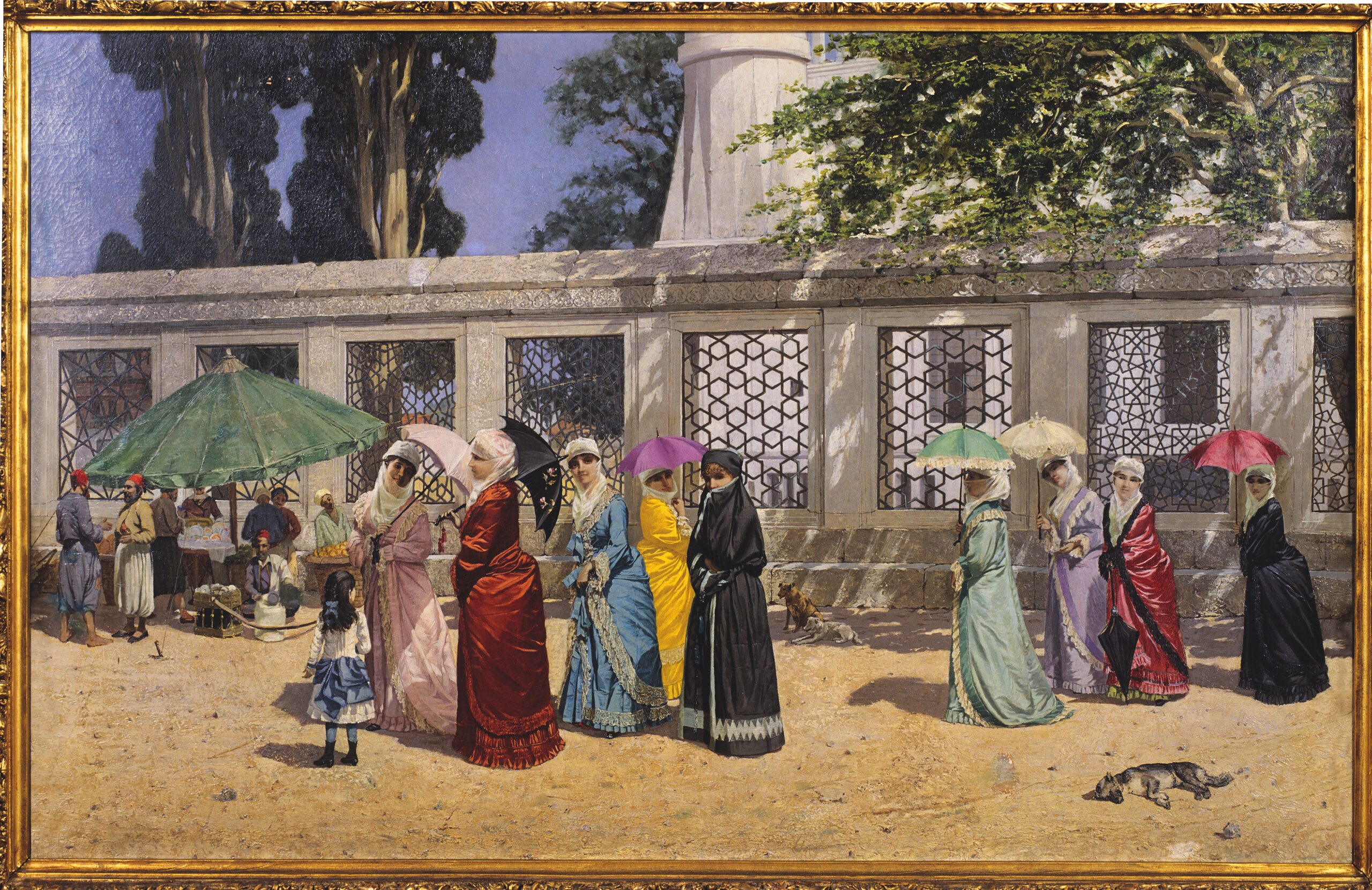
Ladies Taking a Walk (1887) by Osman Hamdi Bey, Yapi Kredi Bank Collection
A jewelled belt, an embroidered garment, a silver-gilt coffee pot: objects offer an intimate way into the history of an imperial city. At London’s V&A, Constantinople to Istanbul: One City, Two Empires will explore how craftsmanship, faith, and power shaped a capital whose influence travelled across the Mediterranean and beyond.
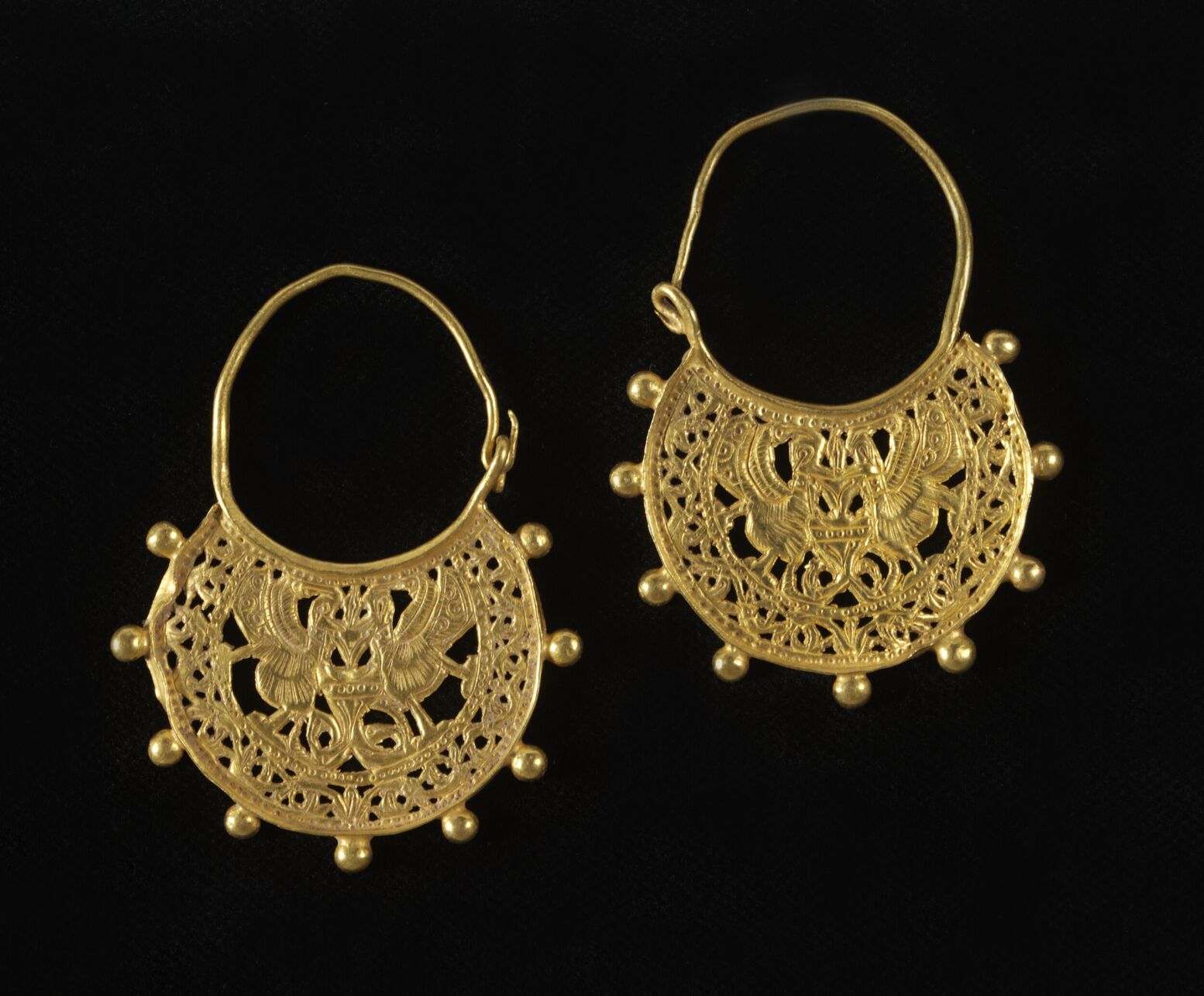
A pair of crescent-shaped gold earrings, the pierced-work decoration depicting two stylised peacocks drinking from a well, Byzantine Empire, 7th century. © Victoria and Albert Museum, London
Spanning AD 330 to 1922, the exhibition follows the city, once called Constantinople and now called Istanbul, through its Byzantine and Ottoman histories. More than 200 objects, including textiles, jewellery, mosaics, manuscripts, and architectural furnishings, reveal distinct but connected artistic traditions. Sacred imagery helped Byzantine rulers project authority; silk, precious stones, and elaborate public processions shaped the Ottoman court’s imperial identity.
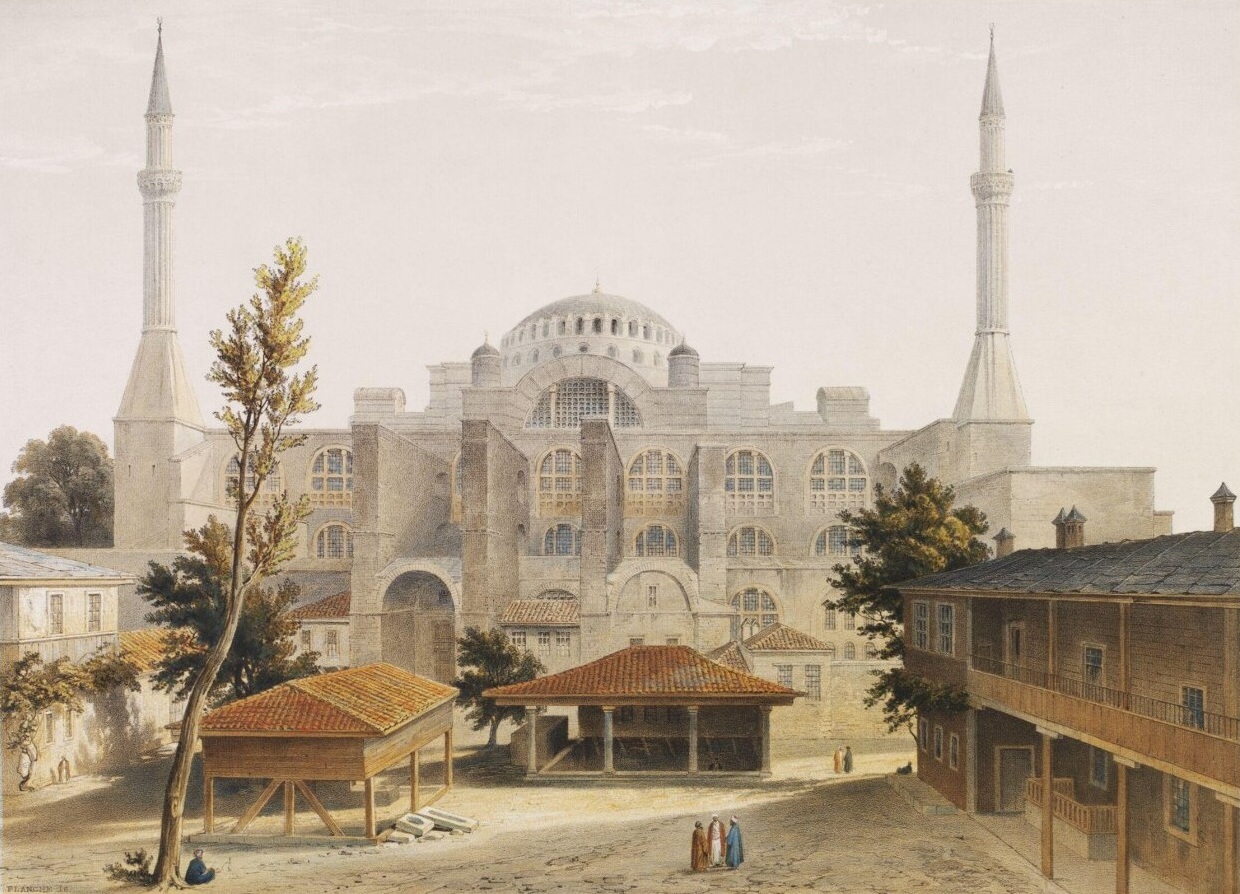
Aya Sofia Constantinople, published by P. & D. Colnaghi, London, 1852. © Victoria and Albert Museum, London
Among the announced highlights are the tenth-century Veroli Casket, carved with mythological scenes, a sixteenth-century velvet covering from Bursa, and a seventeenth-century Ottoman processional scroll. These objects bring the exhibition’s vast historical sweep into focus through the skill of individual makers.
The story also extends beyond palaces and places of worship. Coffee houses, bathhouses, music, and leisure introduce the rhythms of a cosmopolitan city, while nineteenth-century dress and design reveal the growing appeal of Parisian styles. In turn, works by Owen Jones and William Morris trace the influence of Byzantine and Ottoman art on European design. This exchange is especially compelling: a city whose artistic identity was shaped by many communities, and whose materials, motifs, and ideas found new expression far beyond its shores.
Constantinople to Istanbul: One City, Two Empires opens at V&A South Kensington, London, on November 7, 2026.
Explore our Cultural Dispatches column for more exhibitions, openings, and events worth discovering.