
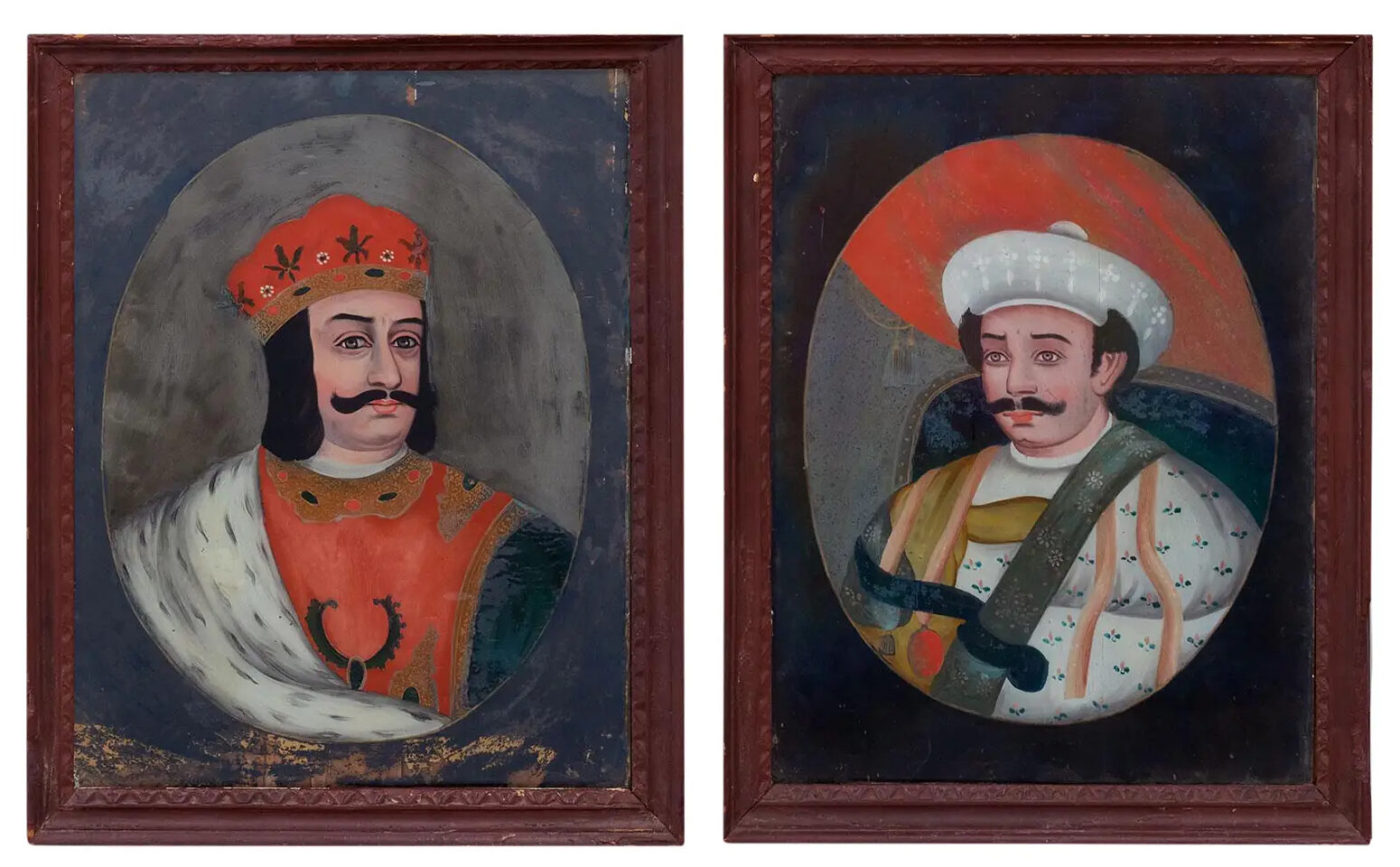
In a tour of her Parisian home, designer Tory Burch opened the doors to her meticulously curated apartment, revealing a striking collection of 18th-century Indian reverse glass paintings. These shimmering treasures represent far more than standard antique decoration—they are physical relics of a centuries-old tradition. The exacting technique, known in the West as verre églomisé, requires an artist to paint counterintuitively in complete reverse, applying fine details like the glint of a pearl or the pupil of an eye first, before layering the background washes last. Originating in Renaissance Italy, the medium travelled via Jesuit missionaries to China, where workshops perfected a secular export style that eventually sailed across the Indian Ocean via colonial trade routes.
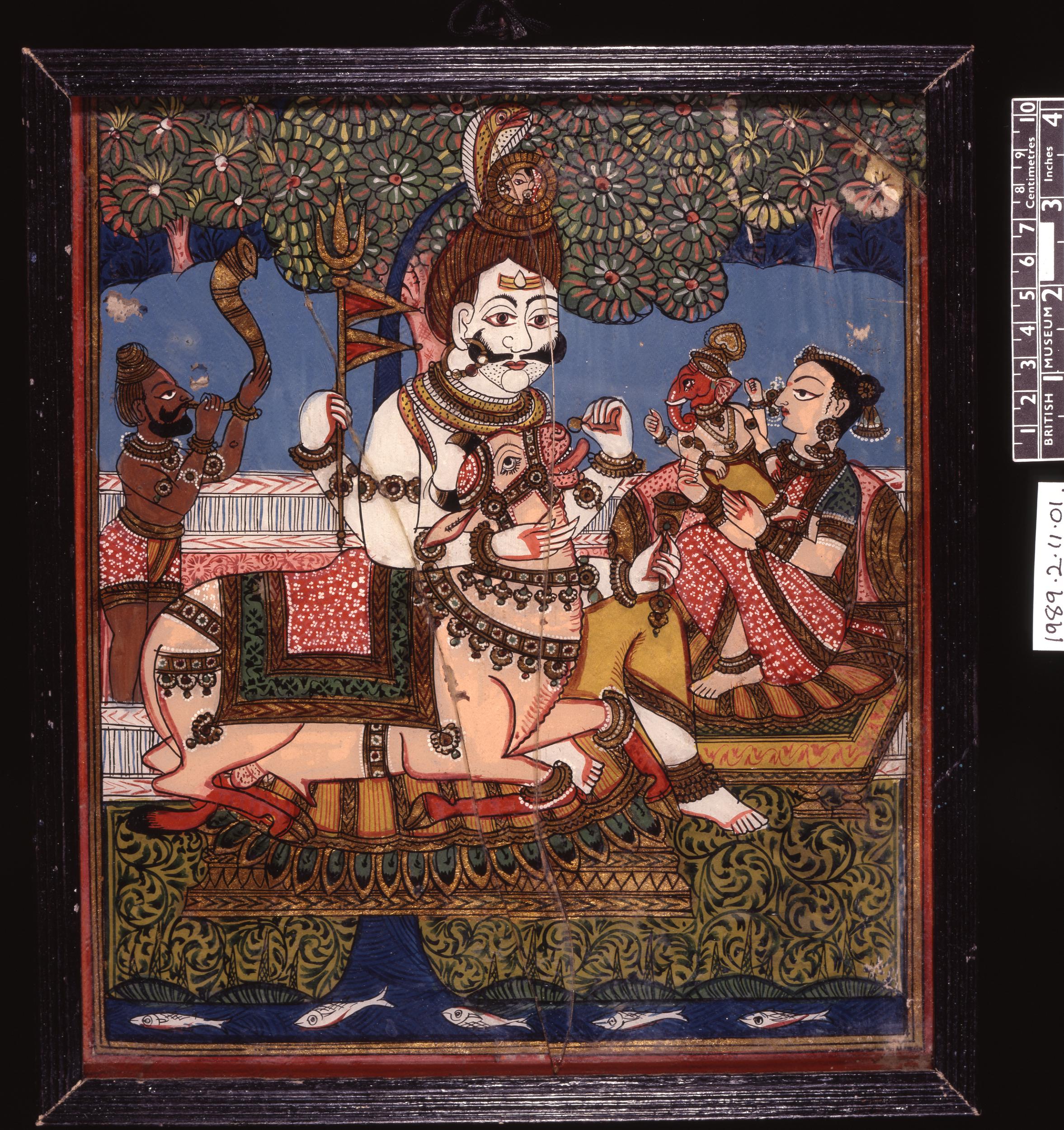
Depicts Siva, Nandi and Parvati with Ganesa. Ganga is seen flowing from the hair of Siva. Photo Credit: The British Museum
When these luminous glass pieces landed on Indian shores in the late 18th century, they sparked an immediate design revolution. Wealthy Indian royals and elite patrons, captivated by the glass’s brilliant, reflective quality, began commissioning local artisans to replicate the Western technique. Indian masters quickly moved away from Western subjects, instead using the glass to depict striking, stylized court portraits and vibrant Hindu deities. By placing crinkled metallic foils behind the glass, artists mimicked the opulent, gem-encrusted textures of traditional South Indian woodwork at a fraction of the cost. These pieces possess an enchanting narrative quality; their subjects are often captured mid-moment, gazing away into the distance. Today, these historical paintings offer a radiant, light-catching celebration of European craftsmanship, reimagined by Indian artists.
Explore and shop antique Chinese and Indian reverse glass paintings on Chairish or discover curated global art collections via 1stDibs.